Articles
Industrial Chiller (6 Cooling Solutions for Critical Cases)
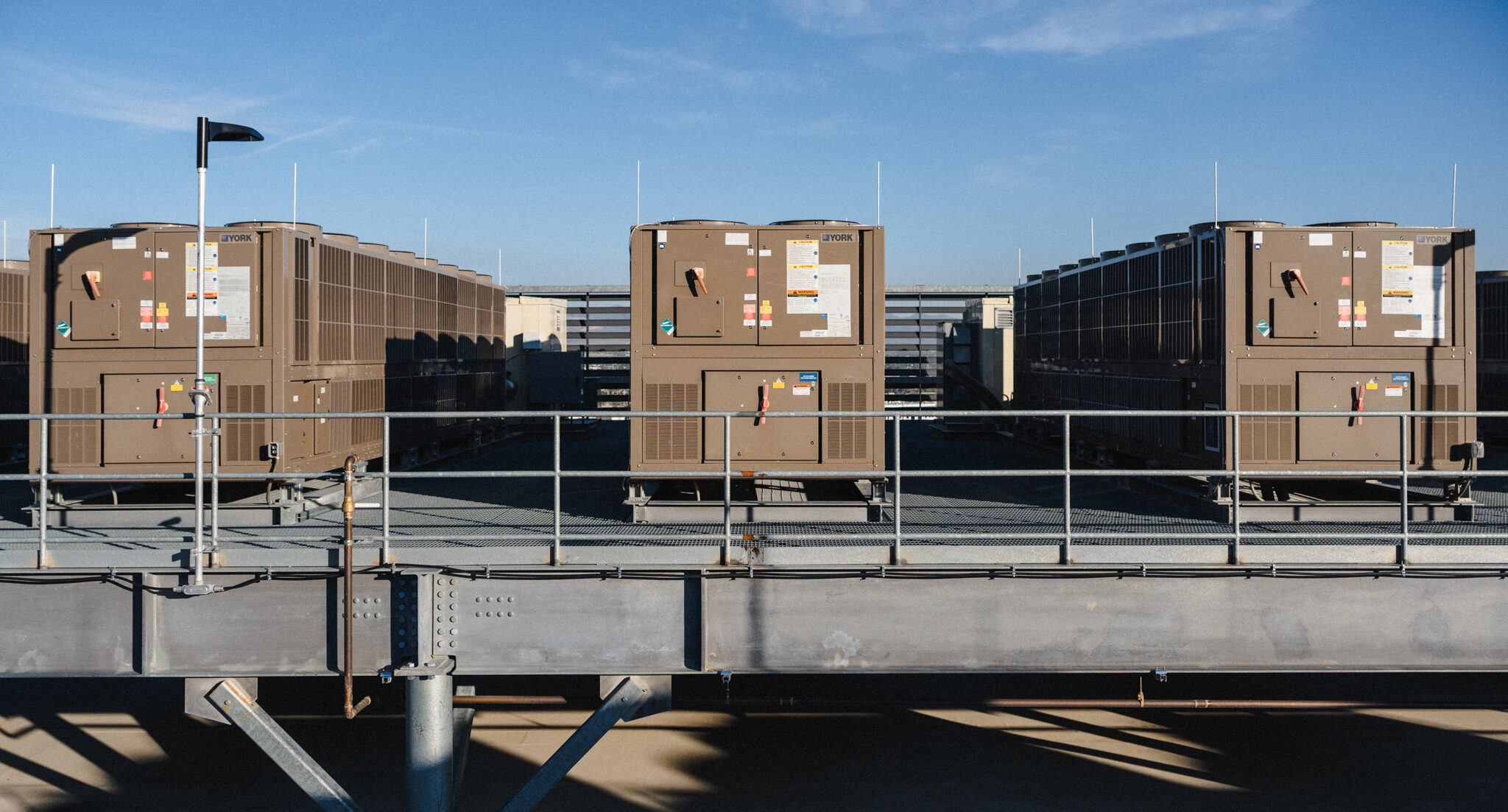
An industrial chiller is a high-capacity cooling system designed to provide controlled cooling for mission-critical equipment, industrial processes, and large commercial infrastructure. Industrial chiller systems remove heat using a refrigeration cycle that circulates liquid refrigerant through a heat exchanger, transferring thermal energy away from equipment and maintaining precise operating temperatures. Facilities across Utah — including those seeking chiller rentals in Salt Lake City, UT — depend on properly engineered chiller systems to support continuous operations under heavy load.
Unlike comfort cooling systems, industrial water chillers and process chillers are engineered for sustained operation under heavy load. In environments such as data centers, healthcare facilities, universities, and manufacturing plants, cooling performance directly impacts uptime, safety, and equipment longevity.
Industrial chiller systems typically support:
- Centralized chilled water distribution
- Continuous operation for industrial processes
- High-density mission-critical cooling
- Redundant uptime protection strategies
- Scalable infrastructure for future expansion
For large commercial facilities, industrial chillers are foundational to operational reliability.
What Is An Industrial Chiller?

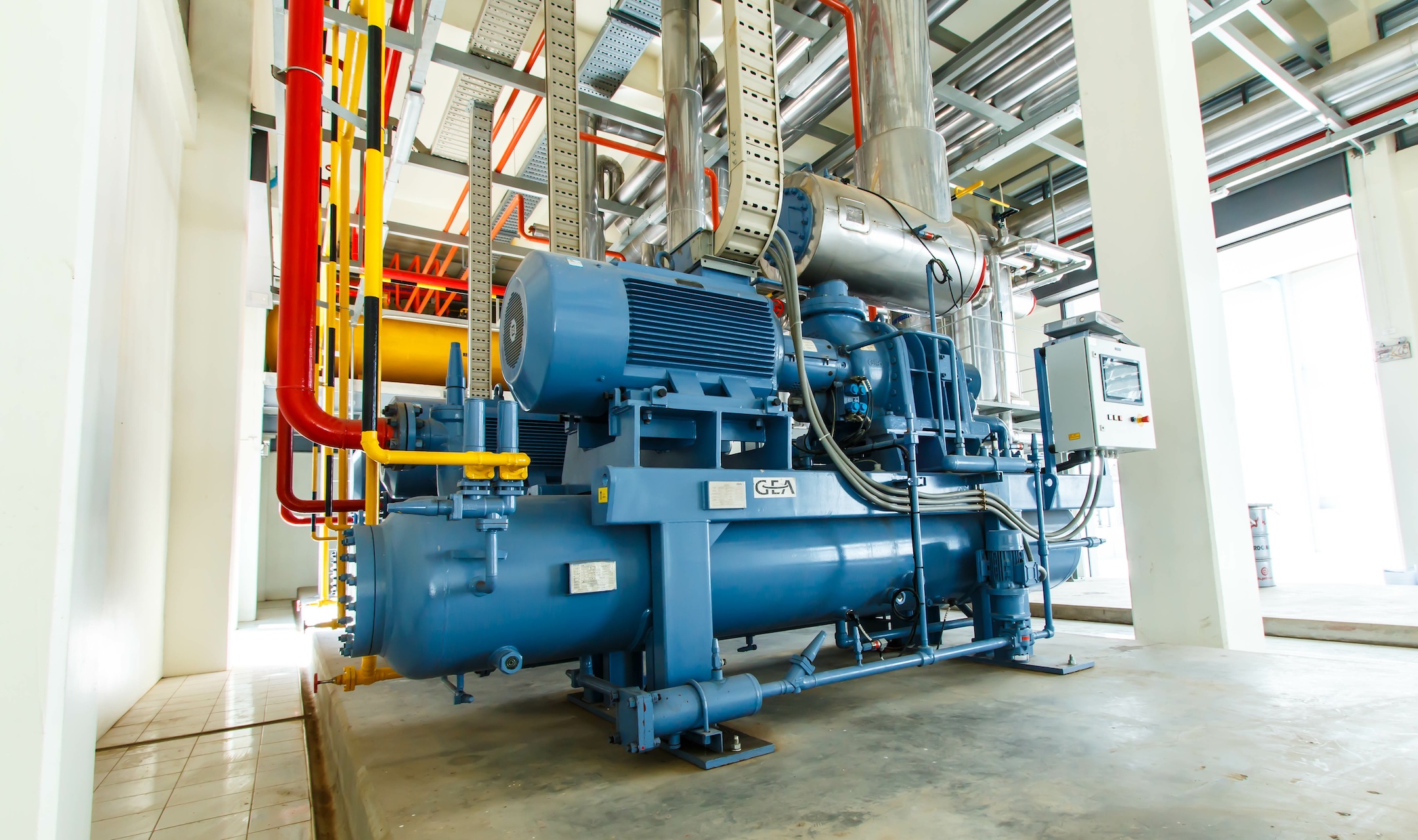
An industrial chiller removes heat from water or another process fluid and circulates it through equipment to maintain stable operating temperatures. The refrigeration cycle relies on a compressor, condenser, evaporator, and expansion device to move liquid refrigerant through the system.
At the core of every industrial water chiller is a heat exchanger. The heat exchanger allows thermal energy to transfer from process water into the refrigerant loop, where heat is rejected through air-cooled or water-cooled methods.
Industrial chiller systems commonly include:
- Compressors
- Evaporator and condenser heat exchangers
- Pumping systems
- Integrated control systems
- Remote control panel interfaces for monitoring
These systems are built for controlled cooling in high-demand commercial and industrial environments.
Industrial Water Chillers And Process Applications
Industrial water chillers are widely used to regulate temperatures in industrial processes where heat must be removed consistently and precisely. Process chillers are often deployed in environments that require exact temperature control to protect equipment or maintain product quality.
Applications include:
- Manufacturing equipment cooling
- Medical imaging and laboratory systems
- Data center cooling infrastructure
- Food and beverage production lines
- Chemical and material processing systems
Controlled cooling ensures that industrial processes operate within safe and efficient temperature ranges.
Water-Cooled vs Air-Cooled Industrial Chillers
Industrial chillers are typically available in water-cooled and air-cooled configurations.
Water-cooled industrial water chillers are commonly installed in central plant systems where efficiency and scalability are priorities.
Advantages include:
- Cooling tower integration: Enhances heat rejection efficiency
- High-capacity heat exchanger performance: Supports large thermal loads
- Improved energy efficiency at scale: Reduces long-term operating cost
Air-cooled process chillers are often selected where water infrastructure is limited.
Advantages include:
- Simplified installation: No cooling tower required
- Reduced water usage: Ideal for water-restricted environments
- Flexible equipment placement: Supports distributed installations
Both configurations depend on effective refrigerant circulation and heat exchanger integrity to maintain reliable performance.
6 Cooling Solutions for Critical Cases
Industrial chiller systems must be engineered and maintained for continuous reliability. The following six solutions define best practices for mission-critical cooling.
1. Central Plant Optimization
Large facilities often operate multiple industrial water chillers within a central plant configuration. Proper sequencing ensures balanced performance.
- Modular chiller staging: Matches capacity to real-time demand
- Redundant plant configuration: Eliminates single points of failure
- Integrated remote control panel coordination: Synchronizes equipment operation
Central plant optimization improves efficiency and operational resilience.
2. Preventative Maintenance And Heat Exchanger Protection
Industrial chiller maintenance preserves performance and protects critical components such as the heat exchanger. According to the U.S. Department of Energy, use of economizers in chiller-cooled data centers results in saving an average of 20% of energy and operating costs — reinforcing that structured chiller maintenance and performance upgrades deliver measurable returns in both reliability and operational efficiency. Freedom Mechanical’s preventative maintenance programs are built specifically to protect chiller heat exchangers, refrigerant systems, and compressors across demanding commercial environments.
- Heat exchanger inspection: Detects fouling and scaling
- Refrigerant charge verification: Ensures proper liquid refrigerant flow
- Compressor diagnostics: Prevents mechanical failure
Regular maintenance reduces energy waste and extends equipment lifespan.
3. Variable-Speed Performance Optimization
Modern process chillers benefit from adaptive performance technology.
- Variable frequency drives: Adjust compressor speed dynamically
- Pump modulation: Reduces unnecessary electrical demand
- Load-based sequencing: Improves part-load efficiency
Performance optimization supports controlled cooling under fluctuating industrial demand.
4. Redundancy Engineering For Mission-Critical Cooling
Facilities such as data centers and healthcare campuses require engineered redundancy to maintain uptime.
- N+1 chiller configuration: Provides backup capacity
- Dual hydronic loops: Protect chilled water distribution
- Automated failover controls: Maintain uninterrupted cooling
Redundancy ensures industrial processes and critical infrastructure remain stable during service events.
5. Chilled Water System Balancing
Improper flow rates reduce industrial chiller efficiency and strain system components.
- Hydronic loop optimization: Maintain stable supply temperature
- Flow rate calibration: Prevent energy loss
- Pressure balancing coordination: Improve overall system stability
Balanced chilled water systems enhance heat exchanger performance and overall reliability.
6. Lifecycle Planning And Equipment Modernization
Industrial chiller systems must be evaluated over time to maintain operational efficiency.
- Performance audits: Identify declining efficiency trends
- Strategic equipment upgrades: Replace aging compressors or controls
- Control system modernization: Improve remote control panel functionality
Proactive lifecycle planning protects infrastructure investment and supports future growth.

Industrial Chillers In Data Centers And Industrial Processes
In data centers, industrial chillers provide controlled cooling for high-density server racks. Stable chilled water temperature ensures that sensitive IT equipment remains within safe operating ranges. Understanding the broader scope of data center cooling strategies helps facilities determine how chiller plants integrate with containment systems, liquid cooling loops, and airflow management.
In industrial processes, process chillers regulate temperature in machinery, preventing overheating and maintaining consistent production quality. Heat exchangers within these systems transfer thermal energy efficiently while liquid refrigerant cycles continuously through the refrigeration loop.
Without reliable industrial water chillers, equipment damage and operational disruption can occur rapidly.
Industrial Chiller Energy Efficiency
Energy efficiency is a major factor in industrial chiller operation. High-tonnage systems running continuously can represent a significant portion of facility operating expenses. Applying proven data center energy efficiency strategies to chiller plant management helps facilities reduce PUE, lower cooling overhead, and extend equipment life.
Efficiency strategies include:
- Optimized chiller sequencing
- Clean and well-maintained heat exchangers
- Proper liquid refrigerant charge levels
- Variable-speed compressor integration
- Temperature setpoint optimization
Industrial chiller maintenance directly impacts long-term efficiency and cost control.
Common Questions About Industrial Chillers
Industrial chillers are foundational to large-scale mechanical infrastructure in commercial and industrial facilities.
What does an industrial chiller do?
An industrial chiller removes heat from water or process fluids through a refrigeration cycle and heat exchanger system to maintain controlled cooling.
What is the role of liquid refrigerant?
Liquid refrigerant absorbs heat inside the evaporator heat exchanger and releases it through the condenser, enabling continuous thermal transfer.
Are industrial water chillers used in manufacturing?
Yes. Industrial water chillers and process chillers are widely used to regulate temperatures in industrial processes requiring precision cooling.
Why is preventative maintenance important?
Regular inspection of compressors, heat exchangers, and control systems prevents efficiency loss and unexpected failure.

Conclusion Industrial Chiller Systems Deliver Controlled Cooling
Industrial chiller systems provide controlled cooling for mission-critical facilities and demanding industrial processes. By integrating heat exchanger performance, liquid refrigerant management, and structured maintenance, facilities maintain stable thermal conditions and protect essential equipment.
Freedom Mechanical specializes in commercial and mission-critical industrial chiller service and optimization. Through disciplined maintenance and performance-focused execution, we help facilities maintain reliable cooling where performance cannot fluctuate. For facilities requiring temporary chilled water capacity, Freedom Mechanical provides chiller rentals in St. George, UT.