Articles
Evaporative Cooling 2026 (5 Sustainable Cooling Strategies)
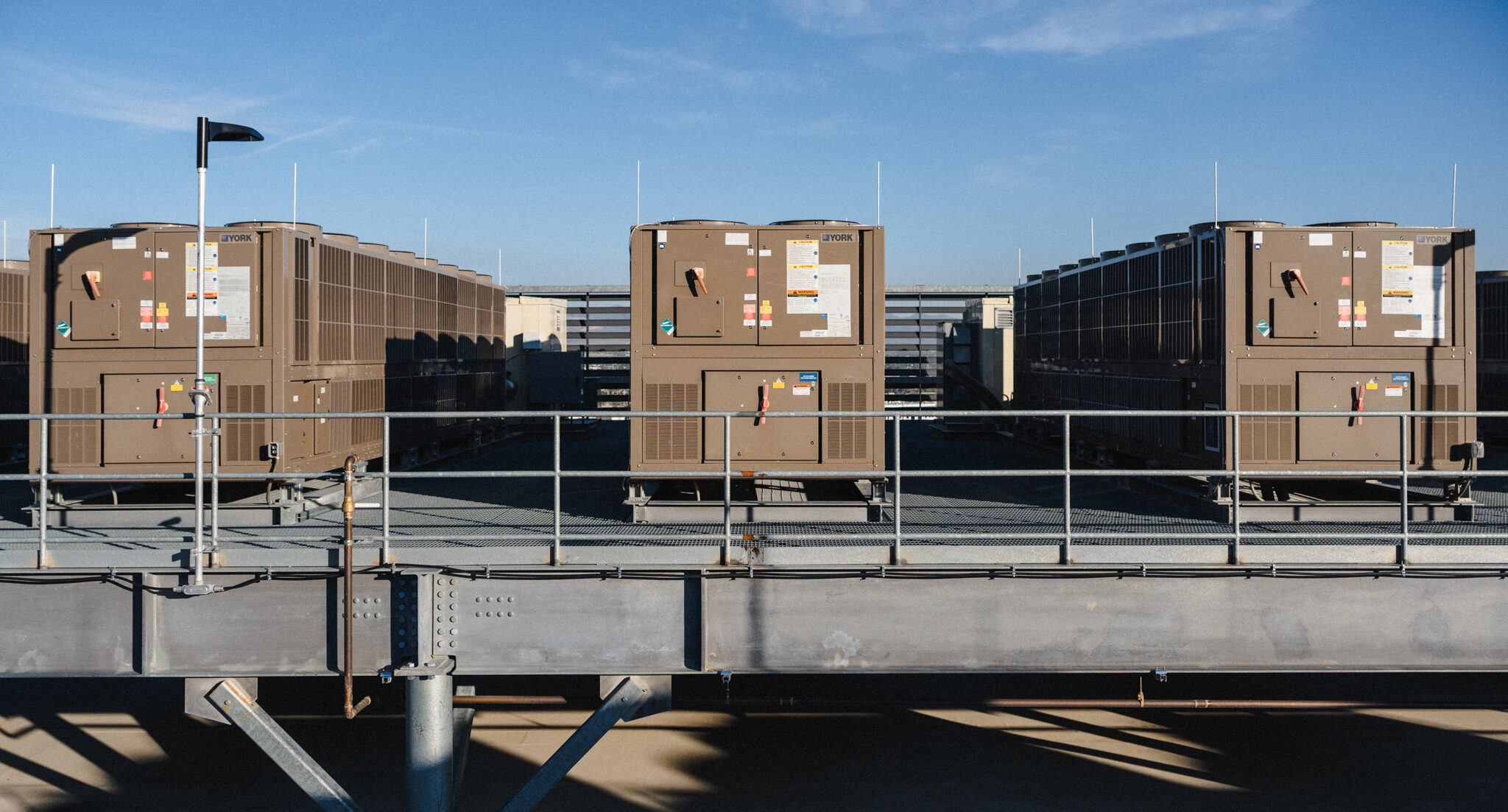
As energy costs climb and sustainability requirements tighten across the commercial sector, evaporative cooling is getting a fresh look from facility managers and data center operators alike. It’s not a new technology, but the way it’s being deployed in 2026, often alongside chillers, dry coolers, and hybrid systems, has evolved significantly. Freedom Mechanical works on the commercial HVAC systems behind these strategies every day, and we’re breaking down how evaporative cooling works, where it makes sense, and where it doesn’t.
In this guide, you’ll learn:
- How evaporative cooling actually works in a commercial setting
- Why the strategy is gaining renewed attention in 2026
- 5 sustainable cooling strategies built around evaporative technology
- How evaporative cooling compares to mechanical and dry cooling systems
- Where evaporative cooling performs best, and where it has limitations
What Is Evaporative Cooling?

Evaporative cooling is a heat rejection process that uses the natural evaporation of water to lower air temperature or fluid temperature. As hot air passes through moisture, water evaporates and absorbs heat in the process, known as latent heat, rather than relying on sensible heat removal the way a traditional chiller or traditional air conditioners would handle it. The effectiveness of any evaporative air conditioner comes down to the gap between wet bulb temperature and dry bulb temperature. The wider that gap, meaning drier ambient air, the more cooling potential the system has to work with, which is the single biggest factor driving evaporative cooling performance in any given location. In commercial and mission critical facilities, this typically shows up in the form of cooling towers, direct evaporative units, or indirect evaporative cooling systems that keep the water separate from the air stream being cooled.
There are a few common approaches used in commercial buildings and data centers today.
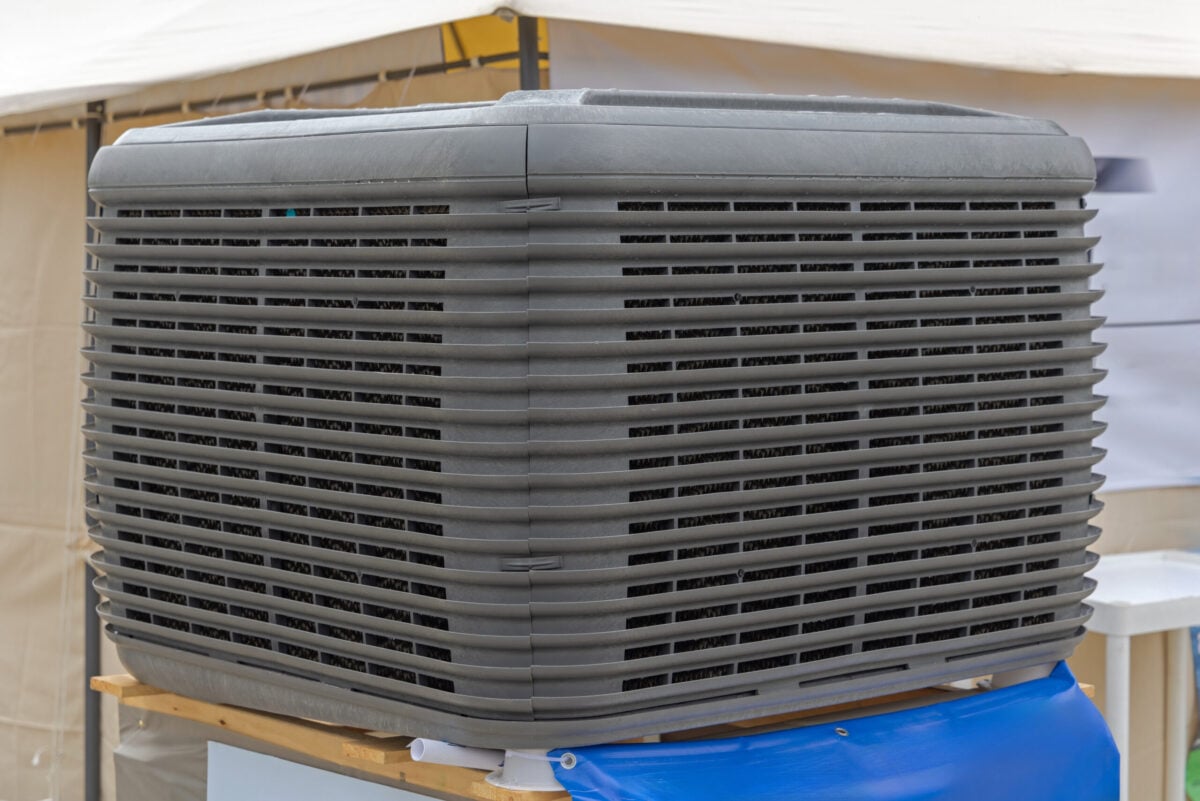
- Direct evaporative cooling: Also known as evaporative air coolers, these systems pass air directly through evaporative cooling pads soaked in water, cooling the air before it enters the building or data hall. Commercial and mission critical facilities rely on industrial evaporative coolers built for continuous duty, not the portable evaporative coolers used for temporary spot cooling in small spaces.
- Indirect evaporative cooling: Water and air remain separated by a heat exchanger, allowing heat to transfer without adding humidity to the conditioned space.
- Adiabatic pre-cooling: Incoming air is cooled through moistened pads before reaching a dry cooling coil, boosting performance without full evaporative water use.
Why Evaporative Cooling Is Gaining Attention in 2026
Two forces are pushing evaporative cooling systems back into the conversation. First, energy costs and sustainability mandates are pushing facility owners to look at heat rejection methods that require less mechanical compression. In the right climate, evaporative coolers can use 80 percent to 90 percent less energy than traditional air conditioners, since they rely on water evaporation rather than energy intensive refrigerant compression. Second, data center growth in dry climates has made evaporative strategies especially attractive, since they perform best exactly where the wet bulb reading stays low relative to actual air temperature.
That said, water use is part of the equation, and it deserves real scrutiny, not just enthusiasm. According to industry guidance from Contracting Business, a leading HVACR trade publication, ASHRAE standards recommend maintaining relative humidity between 20 and 80 percent in facilities using evaporative cooling technology, a wide but important range for protecting equipment and indoor air quality.
Facility managers weighing evaporative cooling need to balance that energy efficiency upside against water availability, local climate, and long-term maintenance needs.
5 Sustainable Cooling Strategies Using Evaporative Cooling

Here are five ways evaporative cooling is being applied in commercial and mission critical facilities today.
- Direct evaporative cooling towers: Widely used in commercial buildings and data centers as the final stage of heat rejection from a chilled water loop.
- Indirect evaporative systems: A strong fit for facilities that need evaporative efficiency without introducing added humidity into the conditioned space.
- Adiabatic hybrid cooling: Combines evaporative pre-cooling with dry cooling coils, reducing water use while still improving performance on hot days.
- Waterside economizing: Uses favorable outdoor conditions to reduce or bypass mechanical cooling altogether during cooler parts of the year.
- Heat recovery paired with evaporative towers: Captures waste heat from the cooling process for reuse in space heating or other building needs.
Most facilities don’t rely on just one of these strategies. A well designed system typically blends evaporative cooling with mechanical backup to maintain performance across a full range of outdoor conditions.
Evaporative Cooling vs. Other Cooling Methods
Evaporative cooling isn’t a replacement for every mechanical system, it’s one tool among several. Unlike traditional air conditioners and traditional air conditioning systems, which rely on refrigerant and compressors to remove heat, evaporative air conditioning uses water evaporation as its primary mechanism. Here’s how it generally compares.
| Cooling Method | Water Use | Energy Use | Best Fit For |
| Evaporative Cooling | High | Low | Hot, dry climates with water availability |
| Mechanical (DX/Chiller) | Low | High | Humid climates, tight environmental control needs |
| Dry Cooling | None | Moderate to High | Water-restricted regions, lower ambient loads |
Hybrid systems that combine evaporative and dry cooling technology are becoming increasingly common, since they let facilities capture efficiency gains while dialing water use up or down based on conditions.
Where Evaporative Cooling Works Best (and Where It Doesn’t)
Being upfront about the trade-offs helps facility managers make a confident, well informed decision rather than assuming one cooling strategy fits every building.
- Best fit: Hot, dry climates with consistent access to water and low humidity for most of the year.
- Best fit: Facilities looking to reduce mechanical cooling energy use without a full system overhaul.
- Limited fit: Humid regions, where evaporative cooling loses much of its efficiency advantage.
- Limited fit: Water-restricted areas, where water usage effectiveness (WUE) goals may favor dry or hybrid systems instead.
None of these are dealbreakers on their own. They’re simply factors that should shape which evaporative strategy, if any, fits your specific facility and climate.
We’re proud to serve business and facility owners in St. George, Utah, and nearby communities with commercial HVAC service, evaporative and hybrid cooling system maintenance, and equipment upgrades suited to Southern Utah’s hot, dry climate. St. George’s desert conditions make it one of the more naturally favorable regions for evaporative cooling strategies in the state.
Frequently Asked Questions

Facility managers evaluating evaporative cooling tend to ask a similar set of questions before moving forward. Here are direct answers to the ones we hear most often.
Does evaporative cooling work well in humid climates?
Not particularly well. Evaporative cooling relies on dry air to absorb moisture efficiently, so its performance drops significantly as relative humidity rises. Facilities in humid regions typically get better results from mechanical or hybrid cooling systems instead.
How much water does evaporative cooling use?
Water use varies by system size, climate, and run hours, but evaporative systems generally use more water than dry cooling alternatives. Many facilities offset this by pairing evaporative towers with water treatment, filtration, and cycle optimization to reduce overall consumption.
Can evaporative cooling be combined with a chiller system?
Yes, and it often is. Many commercial and data center cooling systems use evaporative cooling towers as part of a larger chilled water loop, using the evaporative process to reject heat efficiently before it reaches the mechanical chiller.
Is evaporative cooling a good fit for data centers?
It can be, particularly in hot, dry climates where outdoor air conditions favor efficient heat rejection. Many data centers use evaporative cooling as part of a hybrid strategy, adjusting reliance on it based on seasonal conditions and local water availability.
Does evaporative cooling require a lot of maintenance?
It depends on how you define maintenance. Mechanically, evaporative cooling systems are simpler to install and maintain than refrigerant based equipment, since they have fewer moving parts and no compressor to service. That said, evaporative coolers require more routine maintenance than traditional air conditioners in terms of frequency, including regular water treatment, filtration checks, and periodic media or pad cleaning to prevent scale buildup and microbial growth. Staying current on that routine upkeep helps protect both performance and equipment lifespan.
Freedom Mechanical: Helping You Choose the Right Cooling Strategy
Evaporative cooling can be a genuinely smart, energy efficient choice, but only when it’s matched to the right climate, facility type, and water strategy. Freedom Mechanical works across evaporative, mechanical, and hybrid cooling systems, giving our clients honest, site specific recommendations instead of a one-size-fits-all answer. As a woman owned company built by skilled technicians, we bring both technical depth and straightforward communication to every project.
Whether you’re evaluating evaporative cooling for a new facility or optimizing an existing system, our team can help you weigh the options and land on the right evaporative cooling solution for your facility. Contact our team to schedule a system evaluation and find the right cooling strategy for your building.